
By Akash kumar
Special Feature: The New World Order
In the cold, clinical world of international relations, “stability” is often an expensive commodity, purchased with the currency of blood and treasure. Yet, in the spring of 2026, as the world stood on the precipice of a nuclear-shadowed conflict between the United States and the Islamic Republic of Iran, stability was found in an unexpected venue: the backroom channels of Islamabad.
At the heart of this diplomatic whirlwind stands Field Marshal Asim Munir, the Chief of Army Staff (COAS) of Pakistan. Historically, the role of a Pakistani military chief has been defined by the intractable rivalry with India or the complex counter-terrorism efforts on the Afghan frontier. However, Munir has rewritten the job description. By navigating the “Ten-Day War” and the subsequent “Seven-Week Conflict,” he has emerged not just as a general, but as a global broker—a “soldier’s diplomat” who managed to find common ground between the “America First” zeal of the Trump administration and the revolutionary resolve of Tehran.
This is the story of the “Munir Doctrine,” a masterclass in hedging, intelligence-sharing, and the quiet power of a regional middleweight.
I. The Anatomy of an Emergency
The crisis of 2026 began with a suddenness that paralyzed global markets. Following a series of escalations in the Red Sea and the Strait of Hormuz, a joint U.S.-Israeli campaign launched “surgical strikes” against Iranian nuclear and military infrastructure on February 28. The world held its breath as oil prices spiked to $120 a barrel and the threat of a full-scale regional conflagration loomed.
For Pakistan, the stakes were existential. Sharing a 900-kilometer border with Iran, Islamabad could not afford a “collapsed state” on its western flank. A fragmented Iran would mean an influx of refugees, a surge in Baloch militancy, and the potential for sectarian spillover into Pakistan’s own cities.
General Munir recognized early that neutrality was not a passive state, but an active one. While Pakistan officially condemned the strikes to maintain its fraternal ties with Tehran, Munir was already on the phone with Washington. Leveraging his established rapport with Donald Trump—developed during a series of high-level visits in late 2025—he positioned Pakistan as the only actor with the “street cred” to talk to the IRGC and the “strategic value” to be heard by the White House.
II. The Islamabad Channel: April’s Breakthrough
By early April 2026, the war had entered a grueling phase. A U.S. naval blockade was strangling the Iranian economy, yet Tehran remained defiant. It was here that the “Islamabad Channel” became the world’s most important lifeline.
Under Munir’s direct supervision, the Pakistani capital hosted secret, then public, ministerial dialogues. The image of U.S. Vice President JD Vance and Iranian officials landing at Nur Khan Airbase was a testament to Munir’s logistical and diplomatic reach. While traditional European mediators were sidelined, Pakistan used its “Special Mutual Defence Agreement” with Saudi Arabia and its “Ironclad” friendship with China to create a multi-layered support system for the talks.
Munir’s genius lay in his ability to frame the conflict in terms both sides understood. To the Trump administration, he spoke of “the cost of forever wars” and the benefits of a “Grand Deal.” To the Iranians, he spoke as a neighbor who understood the sanctity of sovereignty but cautioned against the “total destruction” of the state’s infrastructure.
III. The Tehran Shuttle: April 15, 2026
The most pivotal moment of the peace process occurred just days ago. On April 15, Field Marshal Munir arrived in Tehran for what many called a “last-ditch” effort to extend the expiring two-week ceasefire.
The optics were carefully choreographed. A viral video showed Iranian Foreign Minister Abbas Araghchi embracing Munir in a fraternal hug—a rare display of warmth toward a foreign military leader during wartime. Behind closed doors, Munir met with Speaker Mohammad Bagher Qalibaf and the top brass of the IRGC. He wasn’t just delivering messages; he was “narrowing the gaps” on three impossible sticking points: the nuclear enrichment levels, the status of the Strait of Hormuz, and the demand for war reparations.
Munir’s leverage was uniquely Pakistani. As the leader of the world’s only nuclear-armed Muslim nation, his words carried a weight that a civilian diplomat’s could not. He offered the Iranians a “shield of legitimacy”—a way to step back from the brink without appearing defeated.
IV. The Trump Connection and the “Favourite Field Marshal”
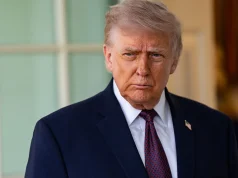
One cannot understand Munir’s success without analyzing his relationship with Donald Trump. The U.S. President has publicly referred to Munir as his “favourite field marshal,” a nod to Munir’s decisive leadership style which mirrors Trump’s own preference for “strongman” optics.
By bypassing the traditional State Department bureaucracy and engaging directly with Trump’s inner circle—including Steven Witkoff and Jared Kushner—Munir ensured that Pakistan was not just a messenger, but a stakeholder. This direct line allowed Munir to request a two-week extension of the initial April 7 deadline, a move that Trump credited to his “conversations with Field Marshal Asim Munir.”
V. The Risks and Rewards of the “Munir Doctrine”
The role of peacemaker is fraught with peril. Domestically, Munir has had to balance a population that is deeply sympathetic to Iran with a military that requires U.S. technological cooperation. Regionally, he has had to ensure that India remains sidelined in the diplomatic process—a goal he has achieved with ruthless efficiency.
The “Munir Doctrine” represents a shift in Pakistani foreign policy: from a client state to a regional anchor. By successfully brokering a ceasefire in what is arguably the most dangerous conflict of the 21st century, the Pakistani military has rehabilitated its international image and secured its place as an indispensable player in the New Middle East.
VI. Conclusion: A Fragile Hope
As we look toward the end of April 2026, the guns are mostly silent. A second round of talks is scheduled for Islamabad. President Trump has signaled he might even travel to Pakistan to sign a final peace accord—a historic “Islamabad Agreement.”
If peace holds, it will be because a general from Rawalpindi decided that the best way to win a war was to ensure it never reached its logical, devastating conclusion. Field Marshal Asim Munir has proven that in the modern era, the most formidable weapon in a general’s arsenal is not the cruise missile, but the credible, confidential, and courageous pursuit of diplomacy.