
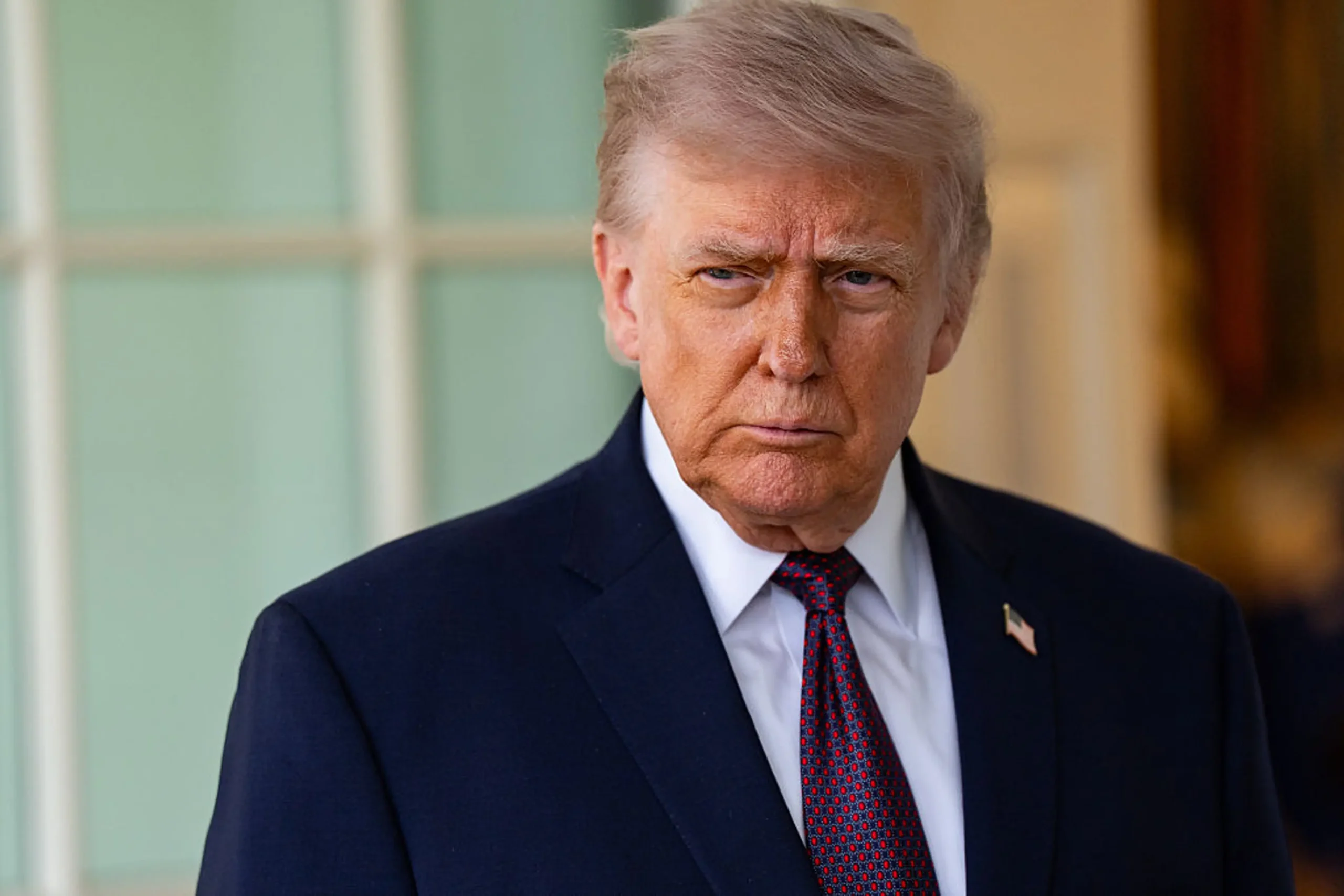
By Akash Kumar
Feature Series: American Icons
In the gilded age of the 1980s, the name “Trump” became more than just a surname; it became a synonym for a specific brand of American aspiration. To some, it represented the pinnacle of capitalistic achievement—the gleaming brass and glass of a Midtown skyscraper. To others, it was the embodiment of a new, louder form of celebrity. Yet, no one—not even the most seasoned political operative—could have predicted that the man who spent decades decorating the New York skyline would eventually redecorate the Oval Office.
This is the definitive biography of Donald J. Trump: the story of an empire built on the bedrock of Queens, refined in the fires of Manhattan, and projected onto the world through the lens of reality television—a journey that ultimately led to the most disruptive political victory in the history of the Republic.
Part I: The Crucible of Queens
The story of Donald Trump does not begin in the penthouse of a skyscraper, but in the sprawling middle-class neighborhoods of Jamaica Estates, Queens. Born on June 14, 1946, Donald was the fourth of five children of Fred and Mary Anne MacLeod Trump.
Fred Trump was a man of discipline and hard-edged efficiency. He was a self-made developer who made his fortune building sturdy, brick apartment complexes for the post-war middle class in Brooklyn and Queens. In the Trump household, success was not a suggestion; it was a mandate. Fred instilled in his sons a “killer” instinct, a drive to be the “king” of any room they entered.
However, Donald’s boundless energy often veered into rebellion. By age 13, his parents made a decision that would forge his character: they enrolled him in the New York Military Academy (NYMA). In the disciplined, hierarchical environment of NYMA, Donald found his rhythm. He excelled in sports and leadership, rising to the rank of captain. It was here that he learned the power of the uniform, the importance of optics, and the fundamental belief that life is a series of battles to be won.
Following a brief stint at Fordham University, Donald transferred to the Wharton School of Finance at the University of Pennsylvania. While his peers were immersed in the counter-culture of the late 1960s, Trump was looking toward the Manhattan skyline. He graduated in 1968 with a degree in economics and a singular goal: to outdo his father.
Part II: Manhattan and the Art of the Brand
In the 1970s, New York City was on the brink of fiscal collapse. Crime was rising, and the elite were fleeing to the suburbs. Where others saw decay, Donald Trump saw an opening. He convinced his father to move the family’s business focus from the outer boroughs to the heart of the city.
His first major triumph was the transformation of the crumbling Commodore Hotel into the Grand Hyatt. It was a masterclass in negotiation, involving complex tax abatements and a visionary use of mirrored glass. Suddenly, the “Queens kid” was a Manhattan player.
In 1983, Trump Tower opened on Fifth Avenue. With its 60-foot internal waterfall and rose-gold hues, it was the physical manifestation of his persona. The 1980s became the decade of Trump. From the Taj Mahal casino in Atlantic City to the purchase of the iconic Plaza Hotel, his name was everywhere. He didn’t just sell real estate; he sold a lifestyle.
His 1987 book, The Art of the Deal, spent 48 weeks on the New York Times bestseller list. It codified his philosophy: think big, use your leverage, and always fight back. Even when the early 1990s brought massive debt and corporate bankruptcies, Trump managed a feat few others could—he convinced his creditors that he was “too big to fail.” He transitioned from being a billionaire to being a brand that was worth more than his liquid assets.
Part III: The Television General
If the 80s made him rich and the 90s made him resilient, the 2000s made him a folk hero. In 2004, The Apprentice debuted on NBC. For fourteen seasons, millions of Americans tuned in to see Donald Trump sit in a high-backed leather chair and decide the fates of aspiring entrepreneurs.
The show was more than entertainment; it was a weekly commercial for his competence. To the “forgotten” workers in the Rust Belt and rural America, Trump wasn’t the man who filed for bankruptcy; he was the decisive, no-nonsense boss who rewarded hard work and didn’t tolerate failure. He was building a political base without even realizing it.
Part IV: The Great Escalator Ride
On June 16, 2015, Donald Trump and his wife Melania descended the golden escalator at Trump Tower. The speech that followed was a shock to the system. He spoke of “winning,” of “walls,” and of a “broken system.”
The political establishment laughed. The pundits gave him a 1% chance. But Trump understood something they didn’t: the American people were tired of the status quo. He treated the Republican primaries like a reality show, using nicknames to dismantle seasoned politicians and social media to speak directly to the voters, bypassing the “fake news” media.
His 2016 campaign was built on three pillars:
- Economic Populism: Renegotiating trade deals like NAFTA that had hollowed out American manufacturing.
- National Sovereignty: A hardline stance on immigration and a promise to put “America First.”
- The Outsider Status: A promise to “Drain the Swamp” of Washington insiders.
Part V: The Electoral Earthquake
The night of November 8, 2016, remains one of the most significant dates in American history. As the results trickled in, the “Blue Wall”—states like Pennsylvania, Michigan, and Wisconsin that hadn’t voted Republican in decades—began to crumble.
Trump had found a path that bypassed the traditional electoral map. He appealed to the white working class, veterans, and those who felt culturally alienated by the coastal elite. When the dust settled, Donald Trump had secured 304 electoral votes. The real estate mogul from Queens had become the 45th President of the United States.
Epilogue: A Legacy in Motion
Donald Trump’s presidency was characterized by the same disruptive energy that defined his business career. From record-breaking tax cuts to the appointment of three Supreme Court justices, his impact on the American judiciary and economy is undeniable.
Critics pointed to his polarizing rhetoric, while supporters lauded his “promises kept” mentality. Regardless of one’s political leaning, Donald Trump’s biography is a testament to the fact that in America, the path to power isn’t always through the halls of government.