Lakshmi Sahgal led the women’s regiment of the INA — yet most textbooks barely mention her story
Written by: Akash Kumar
3 min readUpdated: Jun 4, 2026 09:49 PM IST
When people talk about India’s freedom struggle, a few names appear almost instantly. Mahatma Gandhi, Jawaharlal Nehru, Bhagat Singh, and Netaji Subhas Chandra Bose are among the most remembered figures. But hidden behind these famous names is a remarkable woman who challenged social norms, carried the dream of independence into battle, and became a symbol of courage for thousands of women.
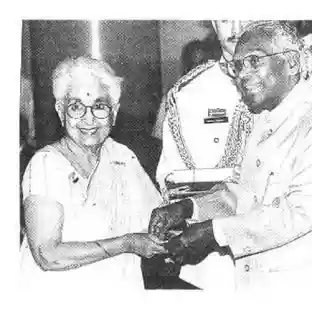
Her name was Captain Lakshmi Sahgal.
Despite leading one of the world’s earliest all-women military units during the Second World War, her story receives far less attention than many of her male counterparts. For many students, her name appears only briefly in textbooks, if at all.
Yet her contribution to India’s freedom movement was extraordinary.
A Doctor Who Chose Revolution
Lakshmi Sahgal was born as Lakshmi Swaminathan in 1914 in present-day Kerala. She studied medicine and became a doctor at a time when very few Indian women entered professional careers.
In 1940, she moved to Singapore, where she treated Indian migrant workers. There, she witnessed the struggles faced by Indians living under colonial rule and became increasingly interested in the freedom movement.
Everything changed when she met Netaji Subhas Chandra Bose.
Bose had arrived in Southeast Asia with a bold plan. Unlike leaders who believed in non-violent resistance, he wanted to raise an army that would fight British rule directly. This force became known as the Indian National Army (INA), or Azad Hind Fauj.
Lakshmi immediately supported the cause.
The Birth of a Women’s Army
One of Bose’s most ambitious ideas was to create a regiment made entirely of women. At a time when women in many countries were rarely allowed to serve in combat roles, the proposal seemed revolutionary.
The regiment was named after Rani Lakshmibai of Jhansi, the legendary queen who fought British forces during the Revolt of 1857.
Lakshmi Sahgal was chosen to lead it.
The unit became known as the Rani of Jhansi Regiment, and it attracted hundreds of women volunteers from across Southeast Asia. Many recruits were teenagers who had never handled weapons before. Yet they trained in military drills, weapons handling, nursing, and battlefield support operations. Historical records suggest the regiment eventually grew to around 1,000 women, making it one of the most significant all-female military formations of its time.
Soon, Lakshmi became known simply as Captain Lakshmi.
Fighting for Freedom
Captain Lakshmi was not merely a symbolic leader. She helped organize recruitment, training, and administration for the regiment while inspiring women to participate actively in the independence movement.
Members of the regiment marched, trained, and prepared for military action as the INA advanced toward India through Burma. Although the campaign eventually failed after the Battle of Imphal, the women of the regiment demonstrated that Indian women could contribute to national struggles beyond traditional roles.
Their presence challenged deeply rooted social beliefs.
For many young women, the regiment represented something larger than military service. It represented equality, confidence, and the right to participate in shaping the future of their country.
More Than a Freedom Fighter
After the war ended and the INA was dissolved, Lakshmi returned to India. Unlike many revolutionaries who faded from public life, she continued serving society.
She settled in Kanpur and worked as a doctor, treating patients for decades, often helping poor families who could not afford medical care.
She also remained active in social causes, women’s rights, and public service. During humanitarian crises and refugee emergencies, she organized relief efforts and medical assistance.
Her commitment to helping others earned respect far beyond political circles.
Why Is She Missing From Many History Lessons?
Historians often point out that India’s freedom movement was shaped by countless individuals whose contributions have not received equal attention.
The story of Captain Lakshmi may have been overshadowed because public discussions of the INA frequently focus on Netaji Subhas Chandra Bose. As a result, many of the women who participated in the movement received less recognition.
Another reason is that traditional historical narratives have often highlighted male leaders more prominently than female participants.
However, this is gradually changing.
Researchers, writers, and educators have increasingly highlighted the role of women in India’s independence struggle, bringing forgotten stories back into public memory.
A Legacy Worth Remembering
Captain Lakshmi Sahgal passed away in 2012 at the age of 97, but her legacy continues to inspire new generations.
She proved that courage is not limited by gender. She showed that leadership can emerge from unexpected places. Most importantly, she demonstrated that women were not just supporters of India’s freedom movement—they were active participants, organizers, and fighters.
Today, as India celebrates the sacrifices made during the struggle for independence, her story deserves a place alongside the nation’s most respected heroes.
History is not only about the people whose names appear in every textbook. Sometimes, it is also about those whose achievements were so extraordinary that they deserve to be rediscovered.
Captain Lakshmi Sahgal is one such hero.
And perhaps it is time that more students learned her name.